Bem-vindo ao Futuro da Educação

For Parents:
Learn more about Montessori
(English version) | for Portuguese, see here.
The Montessori Method
Dr. Maria Montessori (one of the first female medical doctors in Italy) discovered that children are born with a profound desire to interact with their environment in an intelligent way. More than a century ago, following rigorous scientific observation of children around the world, she found that children flourished when they were left free to direct their own learning, within a prepared environment.
She pioneered a radical approach to education based on the scientific study of how children grow and learn, leading to the design of living and learning environments that meet their changing developmental needs.
-Authentic Montessori Environment
Our bilingual Montessori project started in September 2022, with the opening of the our Children’s House in Bordinheira, for children from 3 to 6 years of age. An international team and diverse community of families.
-International Learning Community
We offer an international, multicultural learning environment that respects the differences and talents of each child que respeita as diferenças e os talentos únicos de cada criança. Our Team observes and guides each child according to Montessori Principles, following rigorous AMI training and years of experience.
-Multicultural, Bilingual Setting
Our bilingual environment (where both languages are always present, English and Portuguese) welcomes children from multiple nationalities (14+ currently) and families from different origins and backgrounds. We support each child in multiple aspects of their development: physical, cognitive, emotional and social.
At Montessori HUMANS, our approach brings theory into practice, applying AMI Montessori Principles of this scientific pedagogy, developed by Maria Montessori, and places the child at the centre of their learning process.
Contact us to learn more about our day-to-day!
What we offer:
The Montessori Approach includes:
Mixed-Age groups
Mixed-age groups are a key aspect for a meaningful social experience for children. Montessori designed different learning Environments for different age groups, responding to the changing needs and characteristics of children throughout their development. For example: age 1 to 3: Infant Community; ages 3 to 6: Children’s House; ages 6 to 12: Cosmic Education; and 12 to 18: Montessori Adolescents programs.
The conception of each Montessori environment enables the children to collaborate with and learn from each other as well as from the adults. Classrooms (which we call Environment) are prepared with great attention to detail, and include a selection of materials that supports the development of children in that age group, following decades of scientific studies about human development. Different children will have the choice to work on different activities, alone or in small groups, following their interests and learning at their own pace. Visitors stepping into a Montessori community often say they are struck by the hum of harmonious and varied activity.Hands-On Learning by doing
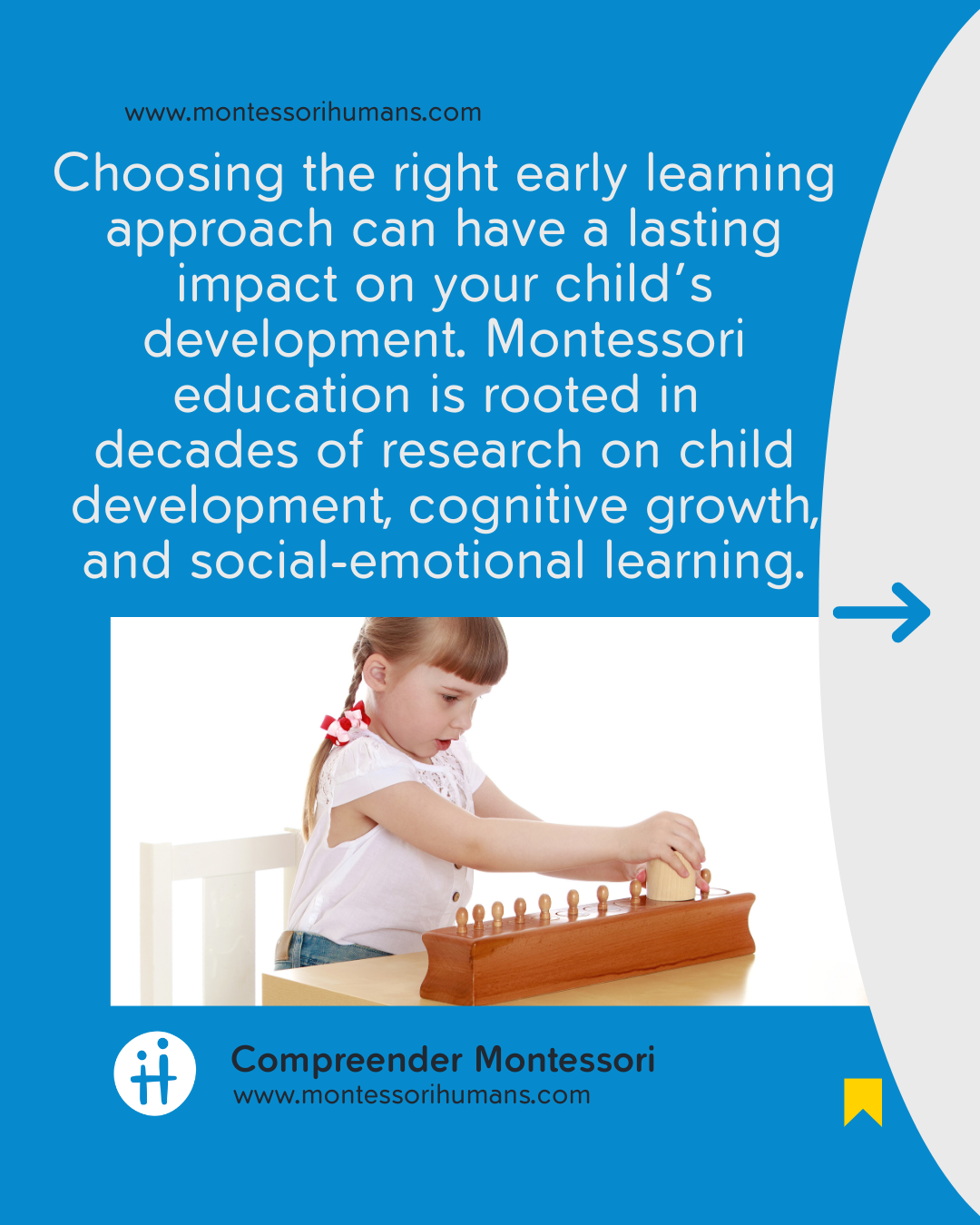
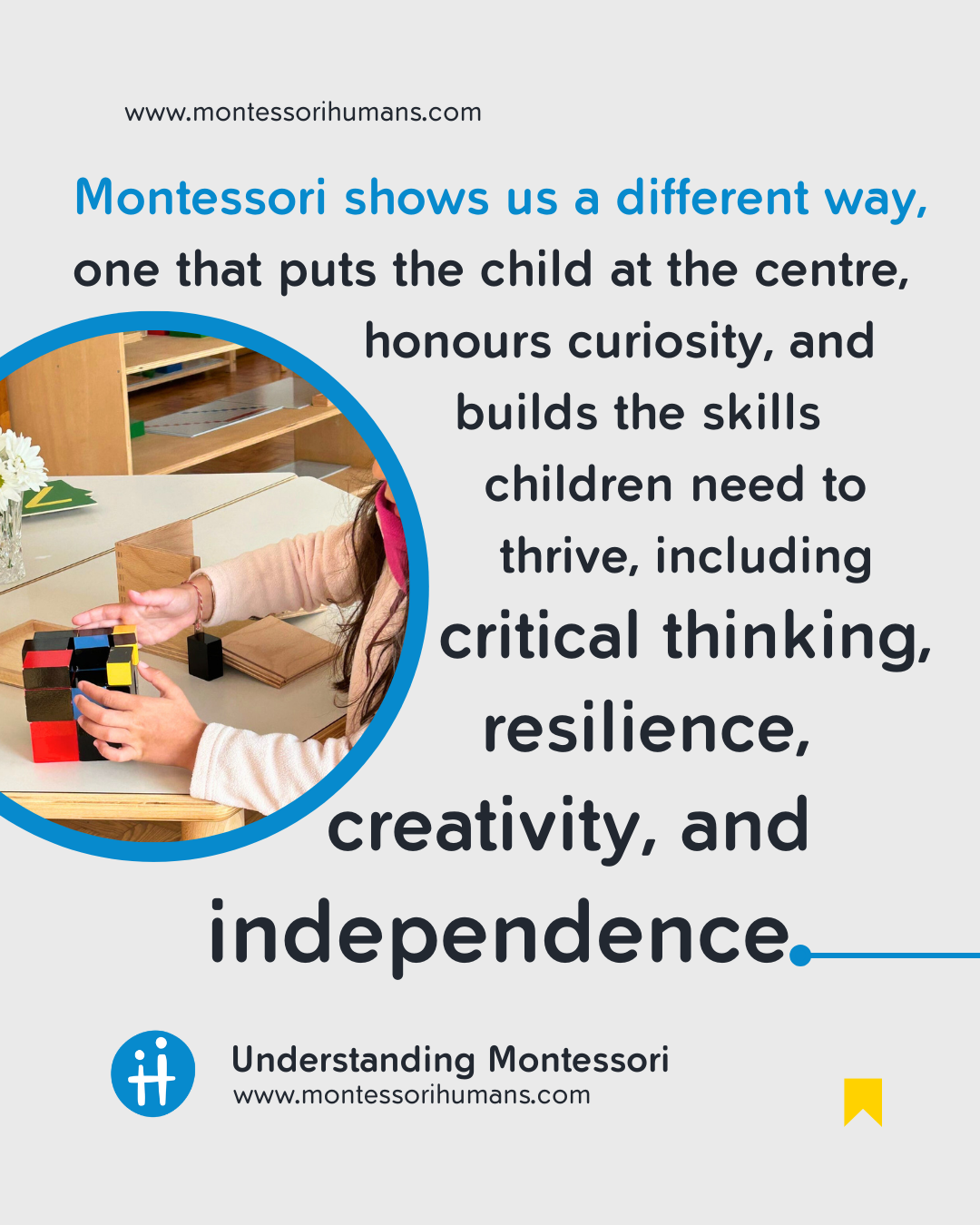
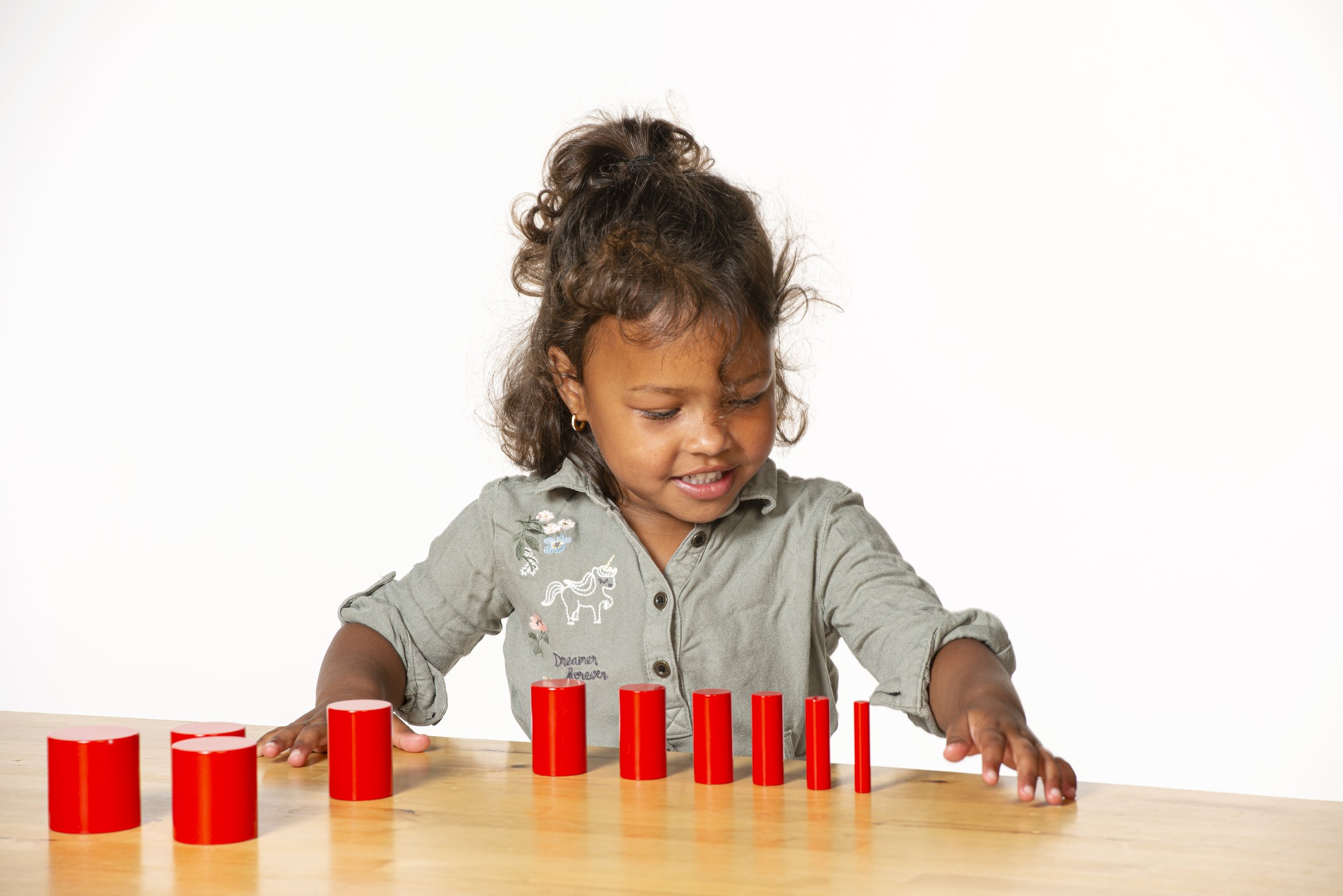
Children learn through hands-on work (rather than by listening to an adult speaking, as in conventional education). They work with pedagogical materials that are designed to help them master skills or areas of knowledge and understanding appropriate to their stage of development. These Montessori materials have been created and refined through practical experience working with tens of thousands of children over the past 100 years, with many refinements from the global community of Montessori schools and from Association Montessori Internationale (AMI), founded by Maria Montessori in 1929 to safeguard the pedagogy.
Individualised Learning
Each child’s experience is unique to them. Personalised lessons are offered to individuals or small groups. This allows for a highly individualised interaction between the adult and each child. The adult knows intimately what each child has mastered, or where they need additional practice. The adult (called their Guide) mentors them towards ownership and responsibility for their own learning.
The Result?
When you choose an evidence-based educational practice, following the Montessori principles, children develop concentration, confidence, self-discipline and a love of learning. And as one might expect, studies also show these children also do better academically, as a result of self-knowledge, expression and exploration.


3-6: Montessori Children’s House / Casa das Crianças
We provide an authentic, bilingual Montessori environment that is fully prepared to support the integral development of each child
We strive to disseminate the Montessori pedagogy in Portugal by enabling more children to experience a holistic education experience that will prepare them for life.
Why Choose Montessori?
Many facets of human identity and personality are defined during the first 6 years of life. This developmental phase of life lays the foundations for the child’s entire life. During this time children are extremely curious, open minded and enjoy learning.
In the Children’s House, we aim to have a holistic environment that supports the development of each child’s character, individual talents and strengths, based on the educational principles of the scientific pedagogy developed by Maria Montessori. We also continue to support the children in the development of their social and emotional intelligence as well as to strengthen and refine their motor skills. The Montessori materials help each child in their individual self-construction process, because they convey concrete learning content that is tangible for the child.
Human education and development cannot be approached from the outside; it takes place inside each individual and is propelled by our Sensitive Periods — in Montessori terminology, these are periods when the child’s attention and interest is directed to particular aspects that they are particularly keen to discover or learn about. To ensure an appropriate response to human development, it is crucial to establish an environment that responds to the inner needs of the child.
In the Children’s House, we offer a daily routine in the prepared environment, for the children from 2.5/3 to 6 years, including:
Learning by doing it (from grasping for understanding)
Individual learning rhythm
Promoting social and emotional competencies
Freedom and Responsibility
Independence
Ability to concentrate
Patience and perseverance
A healthy self-esteem
The experience of discovering something by yourself, ‘connecting the dots’, the basis to understanding the world around us and to adapt to our place and our time.
Every child should be able to preserve their individuality and satisfy their needs by working independently. The child’s self-confidence is strengthened, aiding in the development of their personality, and also the joy of having others around him and feeling a part of a community. A community can only thrive where diversity is accepted and nurtured. The Montessori Pedagogy takes into consideration the individual personality of each child.
Each material has its place and is easily accessible to the child. The clear arrangement of the learning materials, help the child to find his inner order through a structured environment around him. It also helps the child to orient himself within his work area, with the possibility of free movement within the classroom. Today we know that Humans learn through movement. The child chooses a material from the designated place and returns it after he has accomplished his work/activity.
The child develops an interest in the various areas of knowledge, due to the strong simulative nature and attractiveness of the Montessori Materials. The child develops joy and learns to work with great care while handling the material.
The Montessori Teacher/Guide supports the natural development of the children and addresses each specific interest and individual developmental need of the child. The Montessori Guide is of service to the child, and does so by giving presentations, observing and helping the child only when necessary. Therefore we guide the child to work independently.
The mixed-age group has many advantages, such as giving the children the possibility to play with one another, exchange ideas and also giving them the opportunity to learn how to tackle demanding challenges. These interactions enable to develop social and cooperative behaviour from an early age. The younger children have the opportunity to observe and learn from their older colleagues (seen as role models) in the classroom. In turn, the older children are able to deepen their knowledge in all areas and impart their knowledge to the younger children. Each year a new group constellation forms, and enables all the children to have the opportunity to go through all levels of these natural roles during their time at the Casa dei Bambini.
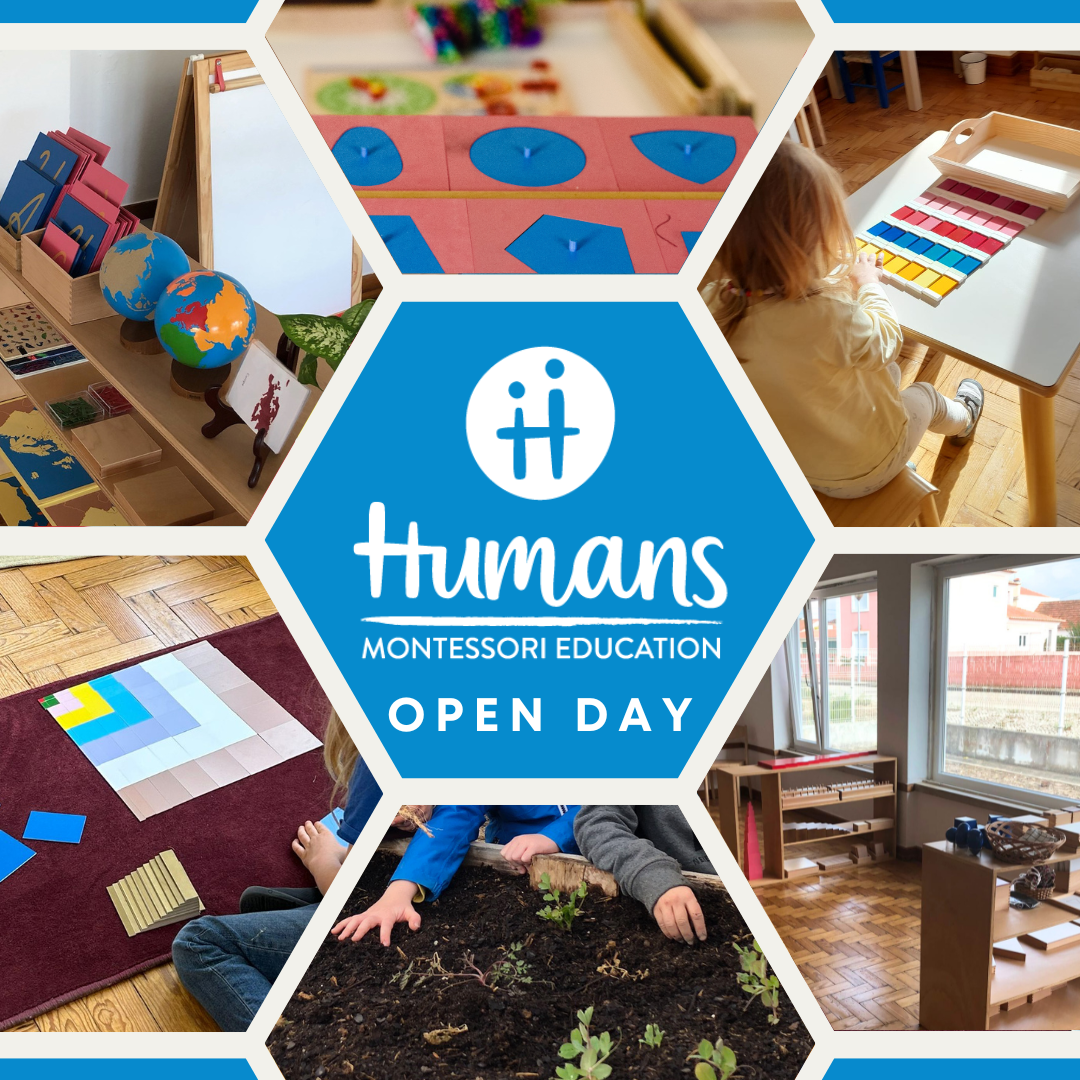
The Montessori Materials: 5 Areas of a Montessori Children’s House
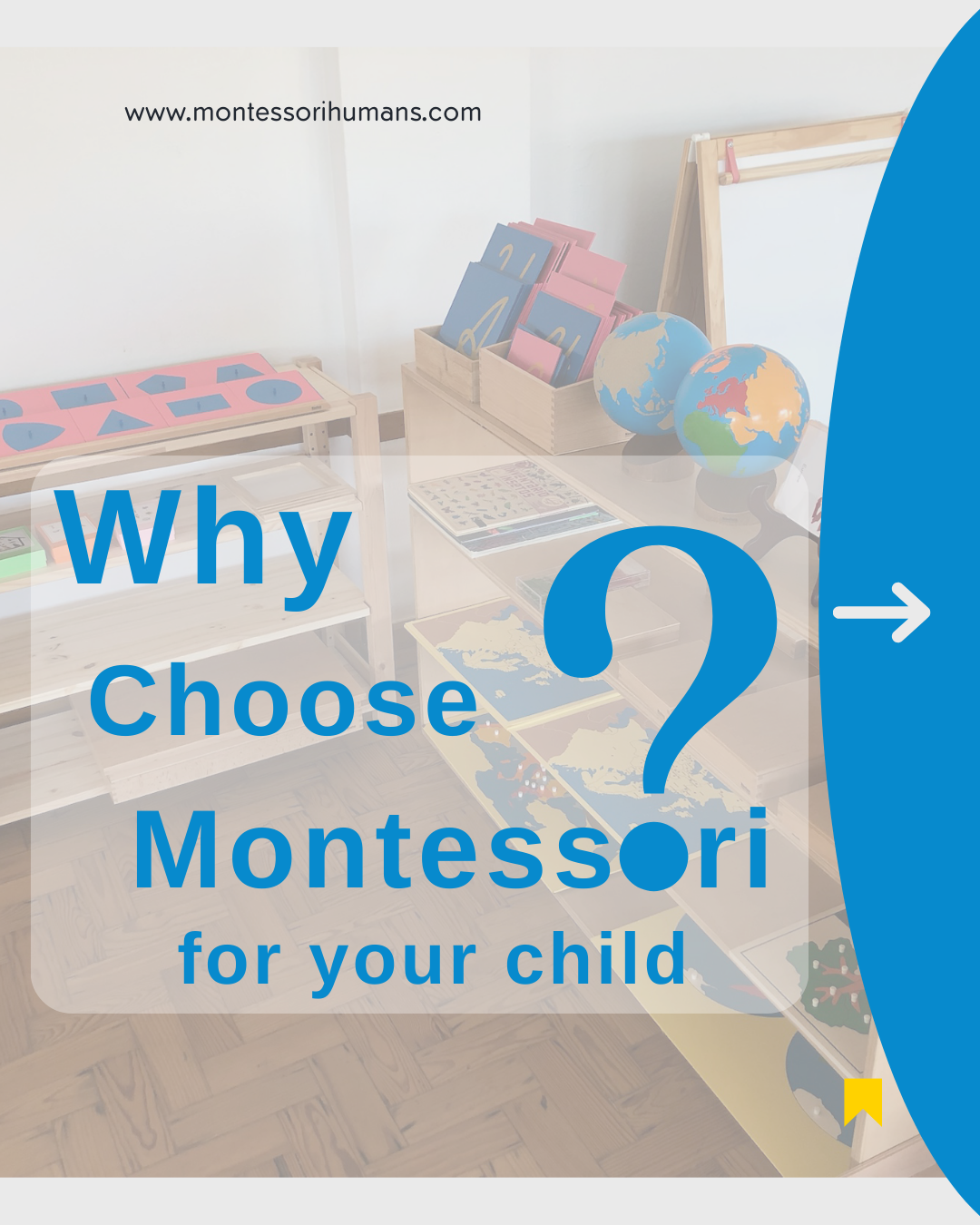
Each Montessori Material is set up on open shelves and is grouped into 5 areas. Each material has a defined place within the classroom. All of the furniture inside the classroom is of the appropriate height for the children and the material is always accessible to the children at all times. There is only one of each material in the classroom therefore the children learn many social aspects such as sharing, learning to wait one’s turn, how to resolve potential conflicts, etc. Each child chooses a material from the shelf, works independently with it until his interest has been satisfied. A key role of the Montessori teacher is to observe, guide and help the child. The Montessori teacher allows the children to work independently and only intervenes if necessary.
Practical Life: The activities in this area support the child in the development of his motor skills, but above all in his independence.
Sensorial: Every input from our environment reachers our brain through our senses. That is how Humans learn. In this area, the child’s senses are employed to explore specifically designed materials that support the development of sensorial perception.
Mathematics: The child is introduced to the wonderful world of numbers and quantities through the concrete, hands-on, Mathematic materials, supporting the child’s natural interest and ability to think mathematically at the appropriate time.
Language: In the "language area", the child can expand their vocabulary. The child’s language development grows continuously and can be offered an introduction into reading and writing when the right time and interest arise.
Culture: many topics about the world and the environment of the child are brought to life (geography, botany, zoology, cultural diversity, among many other themes. The child can therefore make connections between topics and begin to better understand easy and complex connections; the basis for what is also called ‘cosmic education’.